To use your water meter to check for a hidden plumbing leak in San Diego, turn off every water using fixture and appliance, record the meter reading, wait at least 15 minutes without using water, and then check whether the meter reading, sweep hand, or leak indicator has moved.
We provide leak detection support for San Diego properties, and this simple water meter leak test is one of the most useful first checks for confirming whether water is flowing through a plumbing system when the property should be using none.
We are experienced plumbers in San Diego, which is why we know that a useful meter test involves more than simply looking at the dial for a few seconds. Irrigation timers, toilet fill valves, ice makers, filtration equipment, pool filling systems, appliance cycles, and the location of the main shutoff valve can all influence what you see at the meter.
This guide explains exactly how to perform the test, how to read the result, how to narrow the source of unexpected water flow, and what your water meter can and cannot tell you.
What Does a Water Meter Leak Test Tell You?
A residential water meter records water entering a property through the water service.
When faucets, toilets, appliances, irrigation, and other water using equipment are completely inactive, the meter should remain essentially unchanged.
If the meter continues registering water flow during that quiet period, water is still moving somewhere beyond the meter.
That makes your water meter one of the simplest tools available for confirming continuous water use.
The meter does not automatically tell you where the water is going. It simply answers the first important question:
Is water moving through the plumbing system when nobody should be using it?
Once you know the answer, you can begin narrowing the source.
How Water Meters Work in San Diego
Understanding your meter makes the test much easier.
The City of San Diego measures residential water use through water meters. City meters measure water in cubic feet, while water bills calculate consumption in units of 100 cubic feet, commonly shown as HCF.
One cubic foot contains about 7.5 gallons of water.
One HCF represents approximately 748.5 gallons.
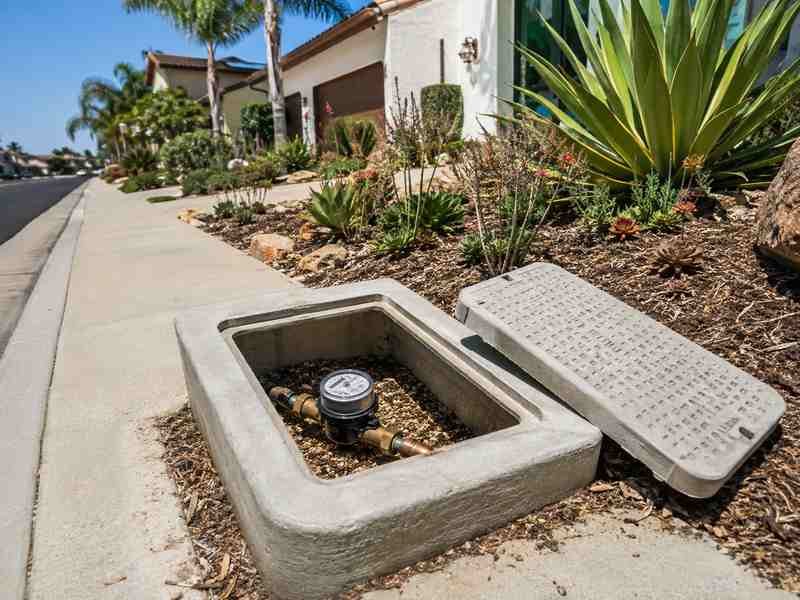
The City explains that residential meters are generally located near the curb in front of the property, commonly inside a concrete meter box marked water.
Different meter brands and register styles are used throughout the city, so the exact meter face can vary from one property to another. :contentReference[oaicite:6]{index=6}
This means your meter may have a traditional mechanical display, a sweep hand, a small flow indicator, a numbered register, or a digital display.
The appearance can differ, but the basic leak testing principle remains the same.
Water movement should create meter activity.
Where Is My Water Meter in San Diego?
Start near the front edge of your property.
Look between the house and the street, usually close to the curb or sidewalk and often roughly in line with an exterior faucet or the path of the incoming water service.
Some San Diego properties have different layouts because of alleys, hillside construction, shared access areas, landscaping, or property configuration.
Look for a rectangular concrete or utility box with a removable lid.
The lid may be marked with the word water.
Open the meter box carefully with an appropriate tool rather than placing your fingers underneath a heavy lid.
Once open, clear only enough loose soil or debris to see the meter face clearly.
There is usually no reason to disturb the meter, piping, utility fittings, or valves simply to perform a reading.
Before You Start the Water Meter Leak Test
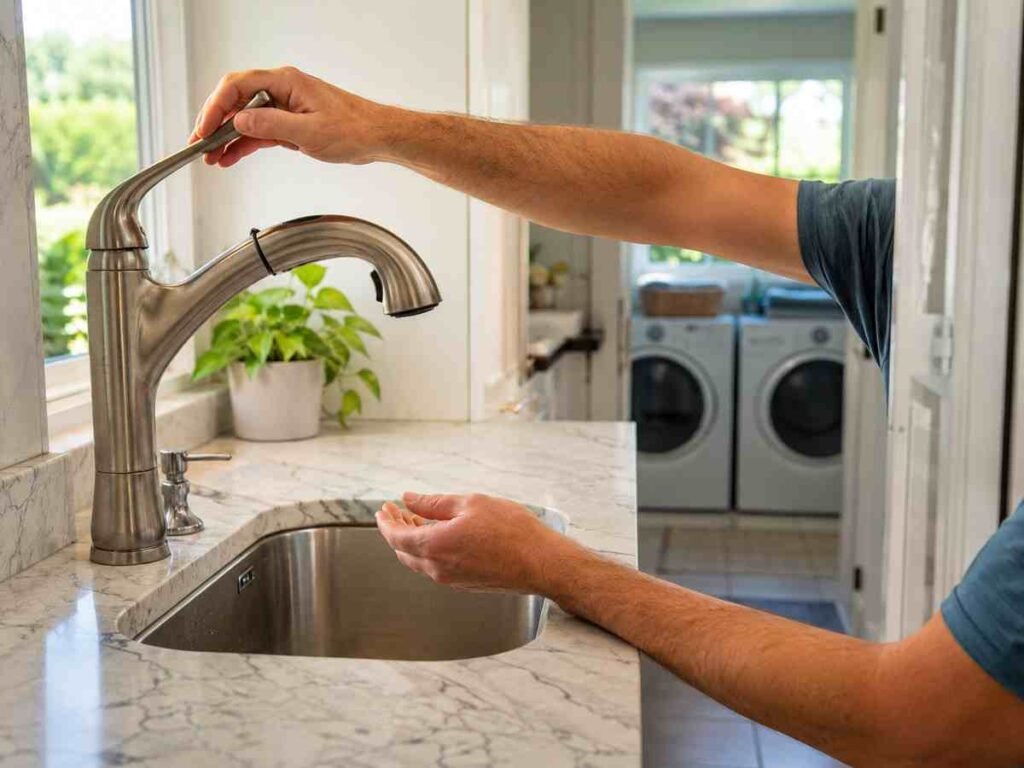
Accuracy depends on creating a period in which absolutely no intentional water is entering the property.
A faucet does not have to be visibly running to influence the test. Automatic equipment can also create meter activity.
Before reading the meter, check toilets, faucets, showers, tubs, dishwasher, washing machine, refrigerator ice maker, irrigation system, pool filling equipment, water filtration equipment, water softener, outdoor faucets, hose connections, and any appliance that may automatically draw fresh water.
The goal is simple.
For the testing period, the property should have zero intentional water consumption.
If another person uses a sink or flushes a toilet during the test, begin again.
How to Use Your Water Meter to Check for a Hidden Plumbing Leak in San Diego
Follow this sequence carefully.
- Turn off every faucet and shower in the property. Make sure handles are fully closed and no fixture is intentionally running.
- Make sure toilets have completed their refill cycle. Listen carefully for a toilet that continues filling quietly after flushing.
- Pause appliances and automatic water users. This includes the washing machine, dishwasher, refrigerator ice maker, irrigation controller, pool autofill system, filtration equipment, and water softener if applicable.
- Locate your San Diego water meter and expose enough of the meter face to read it clearly.
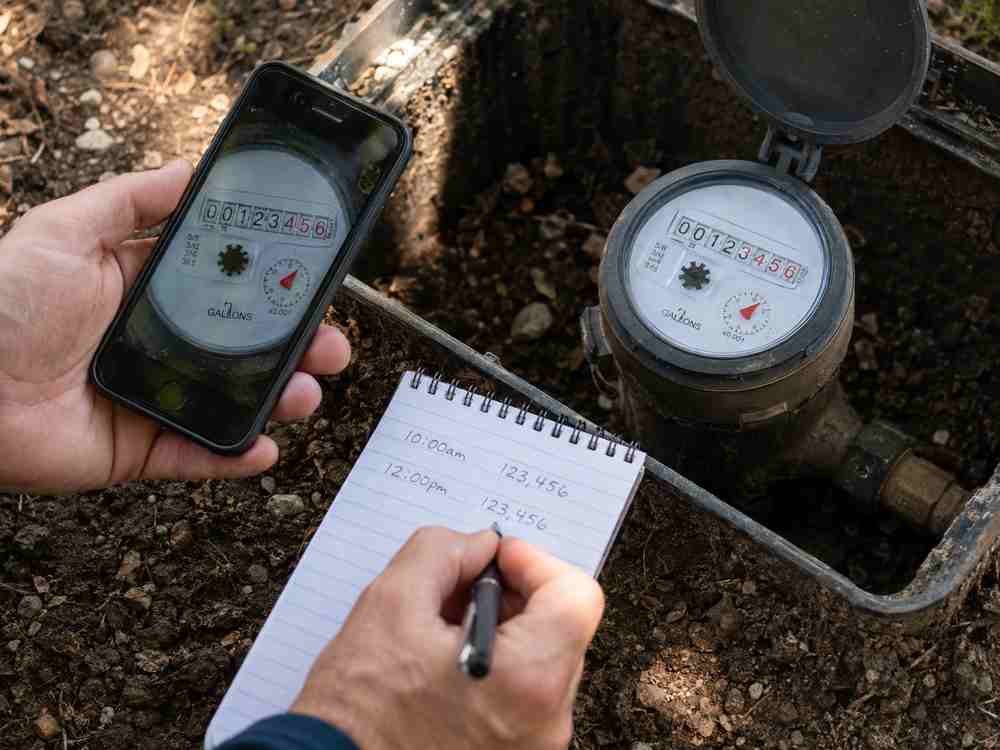
- Record the complete meter reading. If your meter has a small leak indicator or flow indicator, note its exact position as well.
- Use absolutely no water for at least 15 minutes. A longer test period can provide additional information when you are looking for very slow continuous flow.
- Return to the meter and compare the reading and indicator position with your original observation.
The City of San Diego specifically advises customers checking for leaks to turn off faucets and water using appliances and observe whether the meter continues turning. Continued movement can indicate water flow somewhere on the property.
How Long Should You Wait During a Water Meter Leak Test?
For an initial San Diego meter check, 15 minutes is a practical starting point.
A larger continuous leak can often create noticeable meter movement quickly.
A very small flow may require a longer observation period.
If the first 15 minute test appears stable but you still have a strong reason to investigate water usage, repeat the test for 30 minutes or even an hour when the household can remain completely water free.
The longer test can make small differences easier to recognize.
Accuracy matters more than duration.
A clean 15 minute test with every water source controlled is more useful than a one hour test during which an irrigation valve, toilet, ice maker, or appliance activates.
How to Read an Analog Water Meter
Traditional mechanical meters commonly have numbered registers and one or more moving indicators.
The large numbered register records cumulative water consumption.
Some meter faces also have a small indicator designed to respond to relatively small amounts of water flow.
Depending on the meter model, the indicator may resemble a small triangle, star, wheel, or circular dial.
You do not need to understand every number on the face simply to perform a leak test.
Take a clear photograph of the meter before the test.
After the waiting period, compare the second view with the photograph.
Look for changes in the numbered register, sweep hand, or low flow indicator.
Even small movement matters when the property has intentionally used zero water.
How to Read a Digital Water Meter
Digital meters display water usage electronically.
The exact screen sequence varies by meter model.
Some displays show total consumption. Others may display current flow or alternate between multiple screens.
Record or photograph the display before starting the test.
After your quiet period, compare the reading.
If total consumption increases while the property has used no water, the meter has recorded water movement.
If your digital meter shows a current flow value, a persistent flow reading during a controlled zero use period can also provide useful information.
Because San Diego uses several meter brands and models, focus on the actual consumption change rather than expecting every meter face to look identical.
What Does It Mean If the Water Meter Moves?
Meter movement during a properly controlled test means water passed through the meter.
The next task is determining why.
A slow change can come from a small continuous flow such as a toilet fill valve, irrigation valve, filtration system, small pipe opening, outdoor plumbing connection, or appliance supply.
More noticeable continuous movement indicates a higher flow rate.
Do not use the speed of the meter alone to decide where the source is located.
A small indoor fixture can run continuously, while an underground supply line opening can also begin with relatively modest flow.
Use isolation and inspection to gather more information.
First Check the Toilets
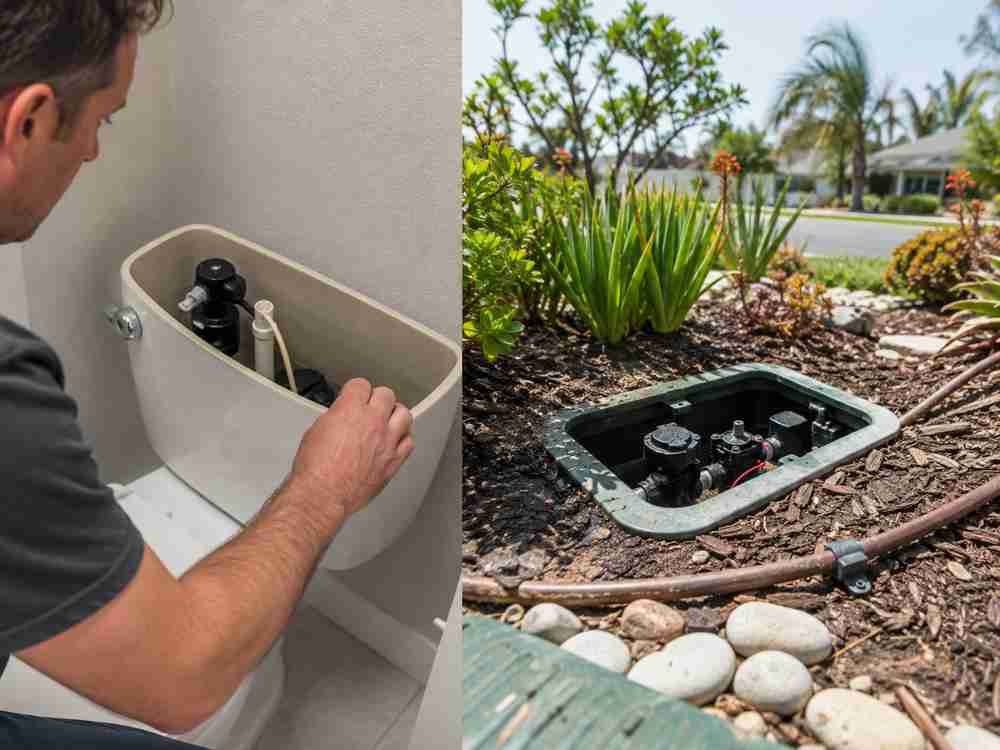
Toilets deserve early attention because a toilet can pass water into the bowl quietly without creating an obvious puddle.
Listen for intermittent refilling.
Look inside the bowl for subtle water movement.
You can also place a few drops of food coloring into the toilet tank and allow the toilet to sit without flushing.
If colored water appears in the bowl, water is passing from the tank into the bowl.
After completing the toilet check, repeat your meter test.
If the meter remains stable after correcting or isolating the toilet, you have identified an important source of continuous consumption.
Check Irrigation and Outdoor Water Use
San Diego properties frequently include landscape irrigation, drip systems, hose connections, outdoor faucets, and automatic watering controls.
These deserve their own inspection because outdoor water can disappear into soil without creating an obvious indoor clue.
Make sure irrigation is completely inactive during the meter test.
Review the controller schedule.
Check valve boxes.
Look around sprinkler heads and drip zones for consistently moist soil.
Inspect hose bibs and attached hoses.
A valve that allows a small amount of continuous flow can influence your meter even while the irrigation controller appears inactive.
If possible, isolate the irrigation supply and repeat the meter test.
A meter that becomes stable after irrigation is isolated gives you a much clearer direction for the next inspection.
Check Appliances and Automatic Water Systems
Modern homes can have several automatic water users that are easy to overlook.
A refrigerator may refill its ice maker.
A reverse osmosis system may replenish its storage tank.
A water softener may enter a regeneration cycle.
A filtration system may perform a scheduled rinse or backwash.
A pool autofill valve may add water automatically.
A washing machine or dishwasher may be paused between stages while still completing part of its cycle.
Before concluding that the meter confirms a plumbing leak, make sure these systems are truly inactive.
This is one of the easiest ways to improve the accuracy of a home water meter test.
Use Your Main Shutoff Valve to Narrow the Search
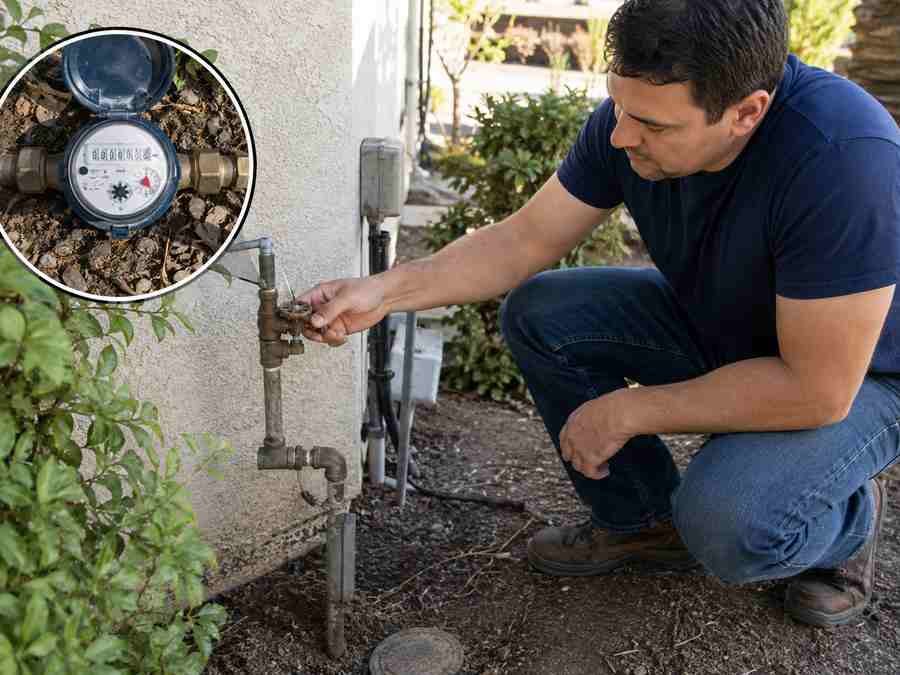
Once you have confirmed unexplained meter movement and checked obvious water users, the property’s normal main shutoff valve may help you narrow the location.
Only perform this step when you clearly know which valve belongs to your property and what it controls.
Close the normal house supply valve.
Then observe the water meter again.
If the meter stops moving after the house supply is closed, the water flow is likely somewhere downstream from that valve.
That directs attention toward the plumbing areas served by the valve.
If the meter continues moving, the possible source may be between the meter and the shutoff valve or on another branch that is located before the valve.
Some properties have irrigation or exterior plumbing branches arranged differently, which is why understanding the plumbing layout matters before drawing a conclusion.
Do not operate an unfamiliar utility valve simply for testing.
The goal is diagnosis through observation, not manipulation of utility equipment.
Can the Meter Tell Whether the Leak Is Inside or Underground?
Sometimes it can help narrow the answer, but the meter alone cannot identify the exact pipe.
Suppose all water use has stopped and the meter continues registering flow.
You then close a known house shutoff valve.
If meter activity stops, the water movement is likely occurring on plumbing served after that valve.
If meter activity continues, attention shifts toward the service line or any plumbing branch located between the meter and the valve.
The important word is likely.
Every property is plumbed somewhat differently.
Irrigation branches, accessory structures, guest houses, pool systems, pressure regulators, older alterations, and previous plumbing work can change the route that water follows.
That is why isolation gives you evidence rather than an automatic final location.
What Is a Service Line Leak?
The water service line carries water from the meter toward the property’s plumbing system.
For San Diego properties supplied by the City, the water system connects to the municipal water main through a water service and meter.
The City states that the property owner is responsible for maintaining the portion of the water system extending from the meter toward the property.
A service line can run beneath soil, landscaping, walkways, driveways, or other finished surfaces before entering the building.
Because much of the pipe may be underground, water movement can sometimes be confirmed at the meter before the source becomes visually apparent.
Useful clues can include continued meter activity, unexpected water consumption, localized soil moisture, a consistently damp area, changes in water pressure, or water movement sounds when fixtures are quiet.
Related: How San Diego’s Hard Water Affects Faucets, Valves, Pipes and Plumbing Fixtures Over Time
What About a Leak Under the Concrete Slab?
A water meter can help confirm continuous water flow from a pressurized pipe beneath a slab, but it cannot prove that the slab is the exact location.
If all fixtures and automatic water users are controlled and the meter continues moving, an under slab supply pipe is one possibility among several.
Additional clues may include localized warmth on flooring when a hot water pipe is involved, water sounds with fixtures off, moisture around flooring or baseboards, and water usage that continues through a quiet household period.
The correct sequence is to confirm water movement first, isolate sections where practical, and then identify the precise location.
That keeps the diagnosis based on evidence.
What a Water Meter Test Can Detect
A meter test is particularly useful for continuous leaks involving pressurized water supplied through the meter.
Examples include supply pipe leaks, service line leaks, toilet water loss, some irrigation leaks, fixture supply leaks, appliance supply connections, outdoor plumbing lines, and certain under slab water line leaks.
The meter sees the water because that water entered the property through the metered supply.
What a Water Meter Test Cannot Confirm
A stable meter does not mean every possible moisture source has been eliminated.
The test is designed primarily to detect water actively passing through the metered supply during your observation period.
An irrigation leak that occurs only when sprinklers operate may remain invisible during a quiet meter test.
A drain pipe that releases water only while a sink or shower is running will usually create no meter movement once that fixture has been turned off.
Roof water, groundwater, exterior moisture, waterproofing concerns, condensation, and other sources that do not involve fresh water moving through the meter will also produce no meter signal.
This distinction is important.
A water meter is an excellent water flow measurement tool.
It is not a universal moisture detector.
How to Estimate How Much Water Is Moving
Your meter can sometimes provide more than a simple yes or no answer.
Because San Diego meters measure cubic feet, you can estimate water volume by comparing two readings.
Suppose the meter increases by 2 cubic feet during a 30 minute period when no intentional water is being used.
Two cubic feet represents roughly 15 gallons.
If that rate remained constant, the flow would equal about 30 gallons per hour or approximately 720 gallons over 24 hours.
The actual rate may vary, especially with intermittent fixtures or irrigation.
Still, calculating approximate consumption can help distinguish continuous small flow from occasional household activity.
For billing context, San Diego water consumption is presented in HCF.
One HCF equals 100 cubic feet, which is about 748.5 gallons.
That connection between the meter reading and the bill can be useful when investigating an unexplained increase in household water consumption.
What If the Meter Does Not Move?
A completely stable meter during a well controlled test is useful information.
It suggests that a continuous pressurized water leak was not active during that testing period.
That narrows your investigation.
If you are reviewing an unusual water bill, compare current usage with previous billing periods and think about irrigation schedules, guests, landscaping, pool filling, appliance changes, and other temporary water consumption.
If you are investigating moisture rather than a bill, consider whether the source appears only when a specific fixture is used.
For example, a drain connection may release water only while a shower, tub, sink, washing machine, or dishwasher is draining.
Repeat testing can also help when water usage appears intermittent.
What If the Meter Moves Only Sometimes?
Intermittent meter movement can be especially informative.
Watch for patterns.
If the meter moves every few minutes, check toilet fill cycles and automatic equipment.
If activity appears at a particular time of day, review irrigation schedules, filtration cycles, water softener regeneration, or pool filling controls.
If movement begins only after using hot water, examine water heating and hot water plumbing.
If movement begins when irrigation activates, focus on landscape valves, drip tubing, sprinkler lines, and outdoor connections.
Connecting meter activity with a specific system is often more useful than simply knowing that water moved.
Why a Photograph Makes the Test More Accurate
Take a clear photograph of the meter at the beginning of every test.
A photograph gives you an exact visual reference.
Small changes in a sweep hand or low flow indicator can be difficult to remember after 15 or 30 minutes.
Take the photograph from approximately the same angle when you return.
For digital displays, make sure all digits are visible.
For mechanical meters, capture both the numbered register and the smaller indicators.
This simple documentation also allows you to compare repeated tests performed at different times.
Should You Compare the Meter With Your San Diego Water Bill?
Yes.
The meter and the water bill answer slightly different questions.
The meter shows current cumulative water consumption.
Your bill shows recorded consumption for a billing period.
If you are investigating unexpectedly high usage, reading your current meter helps you understand whether consumption is continuing.
San Diego water bills use HCF as the consumption unit, while the meter itself records cubic feet.
Understanding that relationship makes the numbers easier to interpret.
If your household normally uses a relatively consistent amount of water and the meter shows ongoing consumption during a zero use test, you now have direct evidence that deserves further investigation.
When Does a Meter Test Point Toward Professional Leak Detection?
A professional assessment becomes useful when the meter consistently shows water movement but ordinary sources have been isolated and the location remains unclear.
The goal at that stage is not simply to confirm the leak again.
The goal is to locate the specific pipe or plumbing zone responsible for the flow.
Professional diagnosis can combine system isolation, pressure testing, acoustic listening, moisture measurement, thermal imaging when appropriate, and pipe route information.
These methods answer a different question from the water meter.
Your meter tells you that water is moving.
Leak locating methods help determine where that movement originates.
Keeping those two functions separate makes the entire troubleshooting process clearer.
A Practical San Diego Water Meter Routine
You do not need to wait for an unusual water bill before learning how your meter works.
Locate the meter while everything is operating normally.
Take a photograph.
Learn whether yours has a mechanical dial, low flow indicator, or digital display.
Locate the normal property shutoff valve.
Know which systems operate automatically.
Review your irrigation schedule.
Understanding these components in advance makes future water usage questions much easier to investigate.
For San Diego homeowners, the meter is especially useful because it connects the physical plumbing system with the cubic foot consumption that ultimately appears on the utility bill.
Frequently Asked Questions
How do I know if my water meter shows a leak?
Turn off every intentional water user and watch the meter. If the reading, sweep hand, flow indicator, or digital consumption continues changing during a controlled quiet period, water is still passing through the meter.
How long should I watch my water meter for a leak?
Start with approximately 15 minutes. A longer 30 minute or one hour observation can help identify very small continuous flows, provided nobody and nothing uses water during that period.
Where is the water meter located in San Diego?
For many City of San Diego properties, the meter is near the curb in front of the property and is housed inside a concrete box commonly marked water. Property configurations can vary, so some meters may be positioned differently.
Does a spinning water meter always mean a hidden pipe leak?
It confirms water flow, but the source may be a plumbing leak or another water user. Check toilets, irrigation, ice makers, filtration equipment, pool filling systems, appliances, and outdoor plumbing before narrowing the source further.
Can a running toilet move the water meter?
Yes. Water continuously passing from a toilet tank into the bowl must be replaced by fresh water, and that replacement water passes through the meter.
Can irrigation make my meter move when everything inside the house is off?
Yes. Irrigation water generally passes through the property meter. A scheduled irrigation cycle or landscape valve can therefore create meter activity even when every indoor fixture is off.
Can the water meter detect a slab leak?
The meter can detect water consumption caused by a continuously leaking pressurized pipe beneath the slab. It cannot independently prove that the slab is the source. Additional isolation and leak locating methods are needed to determine the exact location.
Can the water meter detect a drain leak?
Usually not during a zero use meter test. Drain water has already passed through the meter when it entered the property. If no new water is being used, a drain opening does not normally create additional meter movement.
Why is my water meter moving slowly when everything is off?
A slow meter can indicate a small continuous water user. Common possibilities include a toilet fill system, irrigation valve, automatic water equipment, appliance connection, outdoor plumbing line, or pressurized supply pipe.
Should I shut off the valve beside the water meter?
Only operate a valve when you clearly know it is the customer controlled valve for your property and you understand its purpose. The meter test itself only requires observing the meter. Utility equipment should remain undisturbed when its function is uncertain.
What should I do after the meter confirms unexplained water flow?
First isolate ordinary water users such as toilets, irrigation, appliances, and outdoor plumbing. Repeat the meter test after each useful isolation step. If continuous movement remains and the source is not visible, professional leak locating can determine which pipe or plumbing zone is carrying the unexpected flow.
Final Takeaway
Your water meter is one of the most useful diagnostic tools available to a San Diego homeowner.
Turn off every intentional water source, record the meter, allow the plumbing system to remain quiet for at least 15 minutes, and compare the reading again.
If the meter remains stable, you have useful evidence that a continuous pressurized leak was not active during the test.
If the meter moves, begin isolating toilets, irrigation, automatic equipment, the house plumbing, and other water using systems until you understand which section is creating the flow.
The key is to use the meter as a measurement tool rather than trying to make it identify the exact pipe.
Confirm the flow first.
Narrow the plumbing zone second.
Locate the precise source third.
That approach gives San Diego homeowners a much clearer answer than guessing from a water bill, damp area, or sound alone.