San Diego’s hard water affects faucets, valves, pipes and plumbing fixtures gradually, starting with mineral buildup inside water lines and ending, years later, with reduced flow, stiffer valve operation and shorter appliance lifespans.
Almost every home in the county draws water carrying a heavy load of dissolved calcium and magnesium, and that mineral content does not pass through a plumbing system unnoticed. It settles.
Why San Diego’s Water Carries So Much Mineral Content
Most of the water reaching San Diego County homes travels a long way before it reaches a tap. A large share comes from the Colorado River, with additional supply pulled from the State Water Project in Northern California.
Both sources pass through mineral-rich terrain on the way here, picking up calcium carbonate and magnesium along the route.
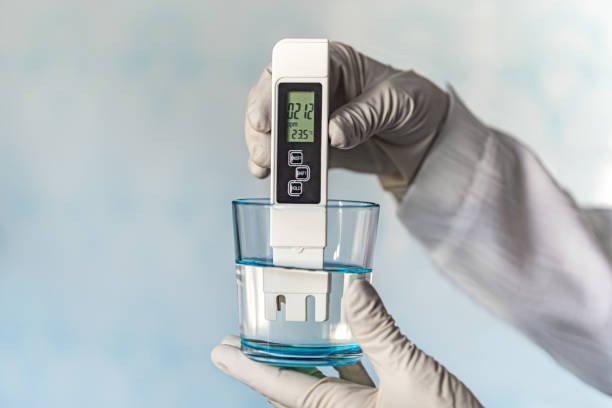
By the time it arrives at a residential meter, testing regularly places San Diego water between 180 and 310 parts per million, a range considered very hard.
For comparison, water above 180 ppm falls into the very hard range. Grains per gallon is another common measurement used locally, and depending on the neighborhood, readings can vary considerably.
These differences are important because water chemistry is highly regional. A plumbing problem that appears to be simple scale buildup in San Diego may need to be evaluated differently in another city based on the local water supply, pipe materials, water-heater condition, and age of the plumbing system.
Homeowners with properties outside Southern California should therefore rely on a professional familiar with conditions in their own area. For example, a local plumber in Oklahoma City can evaluate recurring mineral buildup, restricted flow, fixture deposits, water-heater sediment, and other plumbing symptoms in the context of Oklahoma City homes and local water conditions.
This matters because hardness is not a one-time condition. Minerals are carried through the plumbing system with every gallon of water, which means deposits can gradually accumulate inside fixtures, valves, supply lines, and water-heating equipment over many years.
How Hardness Turns Into Scale
Calcium and magnesium stay dissolved in water while it is moving and under pressure. Once that water sits still, slows down or is heated, the minerals begin to come out of solution and crystallize onto nearby surfaces.
This crystallized layer is called limescale, and it forms wherever water touches metal, plastic, ceramic or rubber for long enough.
Warm and hot water accelerate the process significantly, which is one reason water heaters and hot water fixtures tend to show scale buildup faster than cold water lines.
Scale does not appear overnight. It builds in thin, almost invisible layers first, then thickens gradually as more mineral rich water passes through the same section of pipe or fixture.
A crust that took three years to become visible on a faucet aerator likely started forming within the first few months of use.
The Effect on Faucets
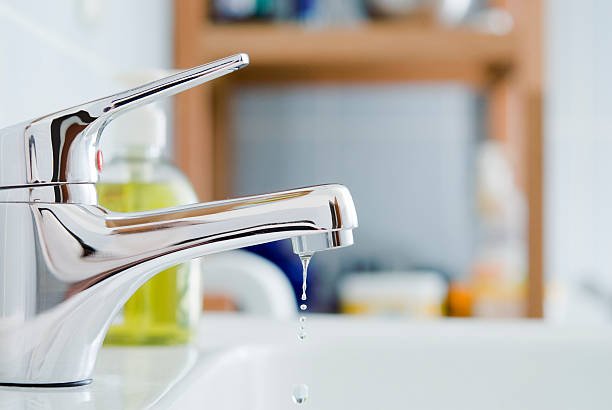
Faucets are usually the first place homeowners notice a change, mainly because they are used daily and are easy to inspect.
Inside a typical faucet, water passes through a small aerator screen, a cartridge or ceramic disc valve, and several rubber seals before it ever reaches the sink.
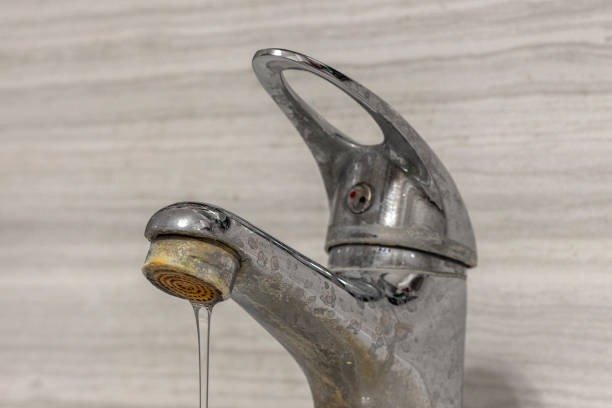
Aerators collect mineral deposits quickly because they force water through a fine mesh screen, which is exactly the kind of surface scale clings to.
A clogged aerator produces uneven spray patterns, reduced flow and sometimes a whistling sound as water squeezes past the buildup.
Cartridge and ceramic disc valves, the internal mechanisms that control flow and temperature when a handle is turned, are more sensitive to hardness than most people realize.
Mineral particles work their way between the moving surfaces inside the cartridge, causing the handle to feel stiff, gritty or harder to turn smoothly.
Over several years, this wear is often what causes a single handle faucet to start dripping even when fully closed, since the internal seal can no longer close evenly against a mineral coated surface.
Rubber washers and O-rings dry out and crack faster when constantly exposed to mineral rich water, which is part of why older faucets in San Diego homes tend to develop small drips at the base or handle earlier than the same fixtures would in a softer water region.
The Effect on Valves
Shutoff valves, angle stop valves under sinks and toilets, and main water valves all share a common weakness with hard water.
These fixtures are designed to be turned occasionally, not constantly, which means mineral deposits have long, uninterrupted stretches of time to build up around the valve stem and seat while the valve sits in one position.
A ball valve left open for years can develop scale around the ball and seat, so that when a homeowner finally tries to close it during an emergency, the handle resists or will not fully seal.
A gate valve, which relies on a threaded stem to raise and lower an internal gate, is even more vulnerable, since mineral buildup on the threads can seize the mechanism entirely.
This is one of the more overlooked long term effects of hard water. A faucet drip is obvious and gets fixed quickly. A shutoff valve that no longer closes properly often goes unnoticed until the moment it is needed most, during a leak or repair, when a homeowner discovers the valve will not turn.
The Effect on Supply Pipes
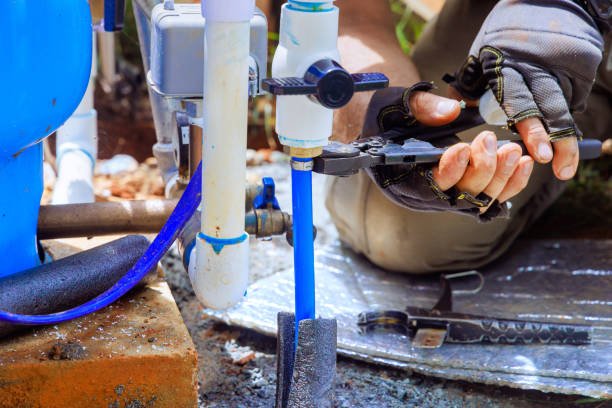
Pipe material plays a large role in how quickly hard water shows its impact.
Copper pipe, common throughout San Diego homes built from the 1960s onward, resists mineral buildup better than older materials but is not immune.
Scale accumulates along the interior wall over time, gradually narrowing the usable diameter of the pipe and reducing flow, particularly at bends, fittings and areas where water flow naturally slows.
Galvanized steel pipe, found in many homes built before the 1960s, is affected more severely. The zinc coating inside these pipes corrodes over decades, and once that coating breaks down, hard water minerals combine with rust to form a rough, narrowing layer inside the pipe.
This combination is a major reason older San Diego homes with original galvanized lines often experience noticeably low water pressure.
PEX and CPVC pipe, increasingly common in repiped and newer homes, are more resistant to scale adhesion because of their smooth plastic interior, though mineral particles can still collect at fittings, valves and low flow points within the system.
Regardless of material, the underlying pattern is the same. Scale narrows the effective diameter of a pipe, and a narrower pipe means the same water pump or municipal pressure has to push water through a smaller opening, which shows up at the tap as reduced flow.
The Effect on Water Heaters and Appliances
Water heaters absorb more hard water impact than almost any other fixture in a home, simply because heat accelerates mineral crystallization.
As water is heated inside a tank, dissolved calcium and magnesium separate out and settle to the bottom, forming a layer of sediment.
This sediment layer acts as insulation between the burner or heating element and the water above it, forcing the unit to work harder and longer to reach the same temperature. Over a few years, this can noticeably raise energy use and slow recovery time.
In tank style water heaters, a thick sediment layer is also one of the leading causes of premature tank failure, since trapped heat against the tank floor stresses the metal from the inside.
Homes in San Diego with unmaintained tank water heaters often see a working lifespan closer to seven to nine years, compared with the ten to twelve years more typical of the same unit in a lower hardness region.
Tankless water heaters are affected differently but just as significantly. Since they heat water on demand through a narrow heat exchanger, scale buildup inside that exchanger reduces efficiency quickly and can trigger error codes or reduced flow long before the unit reaches the end of its expected service life.
Dishwashers and washing machines show hard water effects through spotting, film on dishes, and buildup inside internal water lines and spray arms, gradually reducing how evenly water is distributed during a cycle.
A Realistic Timeline of Hard Water Wear
Understanding how this progresses over time helps explain why hard water damage often catches homeowners off guard.
In the first one to two years, buildup is mostly invisible. A thin mineral film begins forming inside pipes, water heater tanks and around valve seats, but flow and appliance performance remain close to normal.
By years three to five, visible signs start appearing. Faucet aerators need regular cleaning, showerheads lose even spray, water heaters take longer to produce hot water, and shutoff valves begin to feel stiffer when turned.
By years six to ten, the cumulative effect becomes harder to ignore. Water pressure drops noticeably in older galvanized lines, single handle faucets develop persistent drips, water heater efficiency drops enough to affect utility bills, and valves that have not been operated in years may resist turning entirely.
Past ten years, especially in homes with original galvanized piping or an unmaintained water heater, the effects compound. Pipe diameter loss becomes significant, appliance replacement becomes more likely, and fixtures throughout the home often need repair or replacement closer together in time, since they were all exposed to the same water for the same period.
Reducing the Long Term Impact
A few habits slow this process meaningfully. Periodically removing and soaking faucet aerators and showerheads in a mild descaling solution clears surface buildup before it thickens. Flushing a tank water heater once a year removes loose sediment before it compacts.
Exercising shutoff valves, turning them closed and back open every so often, keeps mineral deposits from sealing them in one position.
For whole home protection, a water softener that uses ion exchange to remove calcium and magnesium before water enters the plumbing system addresses the issue at its source rather than at each individual fixture.
None of these steps reverse damage that has already occurred, but they slow the rate at which new buildup forms, which is often the difference between a fixture lasting eight years and one lasting fifteen.
The Bottom Line
Hard water does not fail a plumbing system suddenly. It works slowly, through mineral layers that thicken year after year inside faucets, valves, pipes and water heaters, until flow, pressure and efficiency have all quietly declined.
Understanding where and how that buildup happens, rather than just that it happens, makes it much easier to recognize early warning signs and address them while the fix is still simple.
Related: How to Use Your Water Meter to Check for a Hidden Plumbing Leak in San Diego
FAQs
How can I tell if hard water is affecting my plumbing?
Common early signs include a chalky white residue around faucet handles and showerhead nozzles, water pressure that seems to drop gradually over months rather than suddenly, longer wait times for hot water, and a handle that feels stiffer to turn than it used to. These signs usually show up years before any visible leak or failure.
Does hard water actually shorten the lifespan of a water heater?
Yes. Sediment from hard water settles at the bottom of a tank and insulates the water from the heat source, forcing the unit to run longer to reach the same temperature. Over several years this added strain is one of the main reasons tank water heaters in hard water areas often need replacement closer to seven or eight years instead of the ten to twelve years seen in softer water regions.
Are copper pipes affected by hard water the same way as older galvanized pipes?
No. Copper resists scale better than galvanized steel, but it is not immune, since mineral layers still form along the interior wall over time. Galvanized pipe is affected more severely because once its internal zinc coating wears away, hard water minerals combine with rust to narrow the pipe further, which is why pressure loss tends to be more noticeable in older homes with original galvanized lines.
Why do shutoff valves get harder to turn if they are hardly ever used?
A valve that stays in one position for years gives mineral deposits an uninterrupted stretch of time to build up around the stem and seat. Since the valve is never exercised, that buildup is never disturbed, which is why a shutoff valve can feel stiff or resist turning entirely the first time someone tries to close it during a repair or emergency.
Can regular maintenance actually slow down hard water buildup?
Yes, to a meaningful degree. Soaking aerators and showerheads periodically, flushing a tank water heater once a year, and occasionally turning shutoff valves closed and open again all remove or prevent buildup before it thickens. None of these steps reverse mineral damage that has already formed, but they can noticeably extend how long a fixture performs well before it needs attention.