San Diego hard water destroys tankless water heaters through a slow process called limescale buildup, where dissolved calcium and magnesium separate out of the water as it’s heated and bond to the inside of the unit’s heat exchanger, gradually choking off flow and forcing the system to work harder until it fails years ahead of schedule.
If you’ve installed a tankless system in San Diego without a plan to manage the region’s notoriously mineral heavy water supply, our team sees the same pattern play out again and again, and we help homeowners across the county catch it early with tankless water heater maintenance and softening solutions built specifically for local water conditions.
Related: Why Does San Diego Have Some of the Hardest Water in California?
Why Tankless Systems Are More Sensitive Than Tank Units?
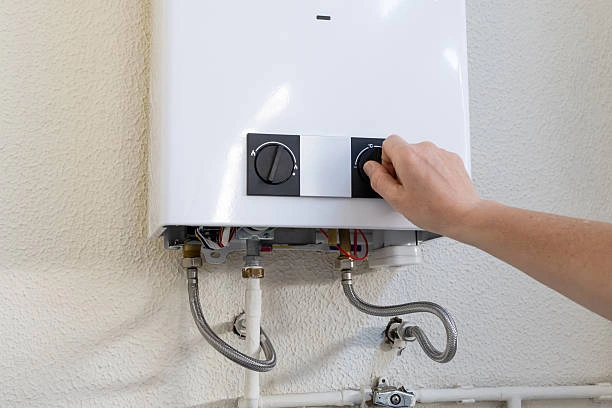
A traditional tank water heater stores a large volume of water and heats it slowly, which gives minerals more room to settle at the bottom of the tank as sediment.
A tankless unit works completely differently. Cold water gets forced through a narrow heat exchanger and heated almost instantly as it passes through, and that combination of high heat and narrow passageways is exactly the environment where calcium and magnesium come out of solution fastest.
Think of it like the difference between a wide river and a narrow pipe carrying the same amount of sediment. The wide river barely notices it. The narrow pipe clogs.
That’s essentially what happens inside a tankless heat exchanger every time hot water runs through it in a hard water region like San Diego.
The Stages of Limescale Damage
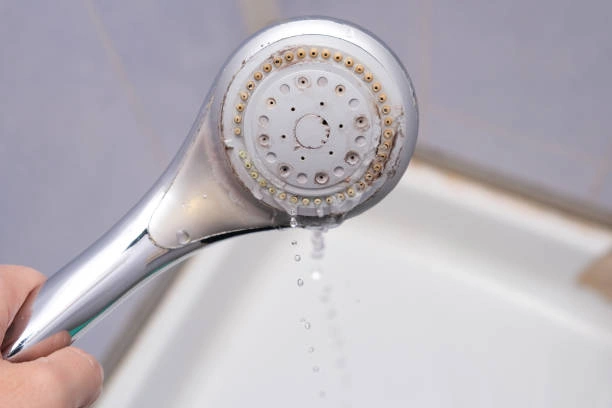
Stage One: Reduced Flow You Barely Notice
The earliest sign is usually a slight delay before hot water reaches full temperature, or a small drop in water pressure at fixtures farthest from the unit.
Homeowners often chalk this up to normal aging rather than recognizing it as the first sign of scale forming inside the exchanger.
Stage Two: Rising Energy Bills
As scale coats the internal surfaces, the unit has to burn more gas or draw more electricity to reach the same output temperature, since the mineral layer acts as an insulator between the heat source and the water passing through.
A quarter inch of buildup can increase energy use by roughly 40 percent compared to a clean unit, according to Department of Energy estimates, and San Diego’s hard water can produce that much scale in as little as two to three years without any maintenance.
Stage Three: Error Codes and Shutdowns
Modern tankless units are built with sensors that detect restricted flow or overheating at the exchanger, and heavily scaled units start throwing error codes or shutting down mid use as the internal passages narrow beyond what the system is designed to handle.
This is usually the point where homeowners finally call for service, though by this stage the damage is often extensive.
Stage Four: Premature Failure
Left unaddressed long enough, scale buildup can crack or warp the heat exchanger itself, which is typically the most expensive single component to replace in a tankless system.
At that point, replacing the entire unit often makes more financial sense than repairing it, even though a properly maintained tankless heater can reliably run for two decades or longer.
What Manufacturers Actually Require?
Most major tankless manufacturers write annual descaling into their warranty terms for installations in hard water regions, and San Diego falls squarely into that category.
Skipping this maintenance doesn’t just shorten the unit’s lifespan, it can void the warranty entirely if a failure is later traced back to undocumented scale damage, leaving the homeowner responsible for the full cost of replacement.
How to Protect a Tankless Water Heater in San Diego?
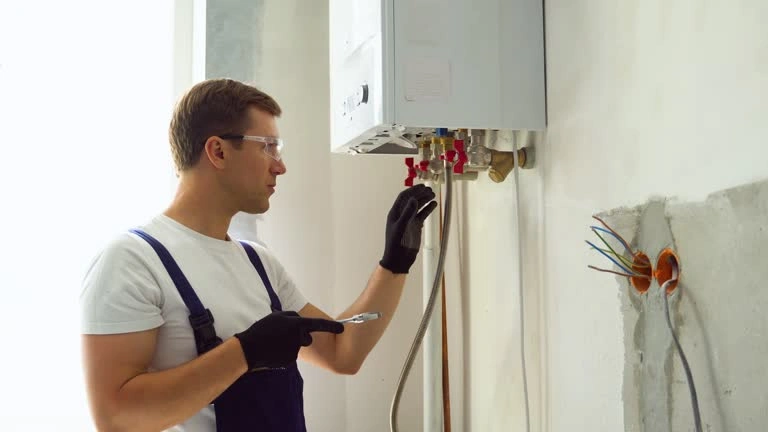
Schedule Annual Descaling
A professional descaling flush circulates a mild acidic solution through the heat exchanger to dissolve existing mineral deposits before they accumulate into a thicker, harder to remove layer.
In San Diego’s water conditions, this is worth doing every twelve months rather than stretching to every eighteen or twenty four months as some manufacturers allow for softer water regions.
Install a Water Softener Ahead of the Unit
A whole house water softener removes calcium and magnesium before water ever reaches your tankless system, which addresses the root cause rather than just managing the symptoms.
Pairing a new tankless installation with a softener from day one is one of the most effective ways to protect your investment over the full expected lifespan of the unit.
Watch for Early Warning Signs
Keep an eye on how quickly hot water reaches full temperature and whether your energy bills start trending upward without an obvious explanation like a rate increase. Both are early indicators worth investigating before they progress into flow restrictions or error codes.
Test Your Water Hardness
A simple water hardness test tells you exactly what you’re working with rather than relying on general assumptions about San Diego’s water supply. This is especially useful if your home sits on a mix of imported and local water sources, since hardness levels can vary somewhat by neighborhood and season.
Related: Clay Pipes and Tree Roots: The Mainline Drain Problem in San Diego
Getting Ahead of the Problem
Limescale buildup in a tankless water heater is one of the more preventable forms of appliance wear homeowners deal with, and the fix is straightforward once you understand what’s actually happening inside the unit.
Between annual descaling, a properly sized water softener, and knowing what early warning signs to watch for, most San Diego homeowners can get a tankless system to run its full expected lifespan instead of replacing it years ahead of schedule.
Our local plumbing team offers water testing, softener installation, and tankless maintenance built around San Diego’s specific water profile, so reach out to our San Diego plumbing specialists if you’d like a professional assessment of where your system currently stands.
Related: Why Does My Drain Keep Clogging in San Diego?
Frequently Asked Questions
How often should a tankless water heater be descaled in San Diego?
Most manufacturers and local plumbers recommend descaling once a year in San Diego due to the region’s naturally hard water, compared to every eighteen to twenty four months in areas with softer municipal water.
Can hard water void a tankless water heater warranty?
Yes, many manufacturers require documented annual maintenance in hard water regions, and a failure linked to undocumented scale buildup can void the remaining warranty coverage.
Does a water softener really extend the life of a tankless water heater?
Yes, removing calcium and magnesium before water reaches the unit significantly reduces scale formation inside the heat exchanger, which is the primary cause of reduced efficiency and premature failure in hard water areas.
How can I tell if my tankless water heater has scale buildup?
Common signs include a noticeable delay before hot water reaches full temperature, reduced water pressure, rising energy bills without another explanation, and error codes related to restricted flow.
Is San Diego’s water considered hard or very hard?
Much of San Diego County falls into the hard to very hard range, generally between 150 and 300 parts per million of calcium carbonate, depending on the specific water source serving that area.