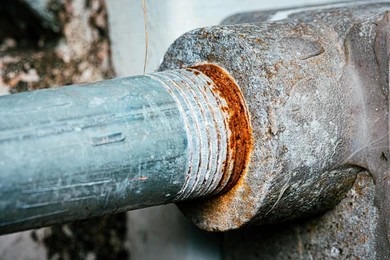
Galvanized steel corrosion is the leading reason older San Diego homes experience a sudden, frustrating drop in water pressure, and it happens because the zinc coating inside these pipes wears away over decades, letting rust build up and narrow the pipe from the inside.
Our plumbing team works throughout San Diego, CA, helping homeowners in older neighborhoods diagnose exactly why their water flow has changed and what it will actually take to fix it for good.
If your shower has gone from strong to weak over the past few years, or every faucet in the house seems to be struggling at once, what’s happening inside your walls is likely more significant than a simple clog.
What Galvanized Steel Pipe Actually Is?
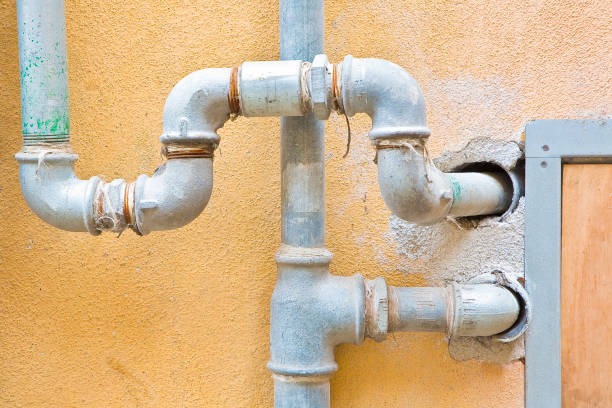
Galvanized steel piping was the standard choice for residential plumbing in the United States through roughly the 1960s, and it remained common in San Diego construction into that same era. The pipe itself is steel, coated on the inside and outside with a layer of zinc meant to slow rust formation and extend the life of the plumbing system.
At the time, this was considered a durable, cost effective solution, and for the first couple of decades it usually performs well.
The problem shows up later. Zinc coatings don’t last forever. Once that protective layer wears thin, typically somewhere between forty and fifty years after installation, the bare steel underneath is directly exposed to water, minerals, and oxygen, and corrosion begins in earnest.
Why Is This Especially Common in San Diego’s Older Neighborhoods?
San Diego has a large stock of homes built between the 1920s and the 1960s, particularly in neighborhoods like North Park, Kensington, Mission Hills, Point Loma, South Park, and Clairemont.
Many of these properties still have some or all of their original galvanized supply lines, and combined with San Diego’s naturally mineral rich water, the corrosion process tends to move faster here than it might in areas with softer water.
As rust forms along the interior wall of the pipe, it doesn’t flake away cleanly. It builds up in layers, a process plumbers often refer to as tuberculation, gradually shrinking the usable diameter of the pipe.
A half inch line that once carried water freely can end up functioning like a quarter inch line, and every fixture connected to that section feels the difference.
Why Does the Pressure Drop Feel So Sudden?
Homeowners frequently describe this as coming out of nowhere, but the corrosion behind it has usually been progressing quietly for years. Pressure loss from galvanized pipe tends to follow a pattern:
Gradual narrowing, then a tipping point. Corrosion builds slowly at first, and a home’s water pressure can stay relatively normal for a long stretch even as the pipe interior continues to shrink. Once the buildup crosses a certain threshold, the drop in flow becomes noticeable almost overnight.
Whole home symptoms rather than one fixture. Because the restriction usually sits in a main supply line or an early section of the system, the pressure loss tends to affect multiple fixtures at once rather than just a single faucet.
Worse performance during simultaneous use. If your shower pressure weakens the moment someone runs the dishwasher or washing machine, that’s a classic sign the whole system is working with less available flow than it used to have.
Rust colored water at startup. Water that runs brown, yellow, or cloudy for the first few seconds, especially after the plumbing has sat unused overnight, points directly at internal corrosion rather than a municipal supply issue.
Other Signs Your Home May Still Have Galvanized Piping
Beyond pressure, a few other clues can help you figure out what’s running through your walls:
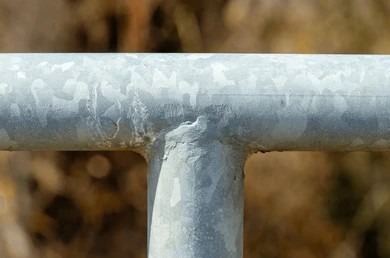
- Visible pipes in a crawl space, basement, or garage that appear dull gray and are magnetic (a magnet will stick to galvanized steel but not to copper or PEX).
- A metallic taste or smell in tap water.
- Recurring pinhole leaks that seem to appear in a new spot every year or two.
- A home built before the 1960s that hasn’t had documented repiping work.
What Can Actually Be Done About It?
Unlike a mineral clog at a fixture, corrosion inside galvanized pipe walls cannot be cleaned out or reversed. The zinc coating that once protected the steel is gone, and once rust has narrowed the pipe from the inside, the internal surface only continues to roughen and restrict flow further over time.
There are really two paths forward, and which one makes sense depends heavily on how much of your system is still original.
Targeted section replacement. In some cases, replacing just the most restrictive section, often the first several feet of pipe coming from the meter, can meaningfully improve flow if the rest of the system is in reasonable shape.
Full repiping with copper or PEX. For homes where galvanized pipe still runs throughout the house, a full repipe is usually the more reliable long term solution.
Both copper and PEX resist the type of internal corrosion that affects galvanized steel, and either option restores consistent pressure throughout the home rather than shifting the bottleneck to the next oldest section of pipe.
Related: How San Diego’s Winter Storms Trigger Underground Sewer Line Backups
Why Does Local Plumbing Experience Matters Here?
Every city’s housing stock has its own plumbing history, and San Diego’s mix of early twentieth century construction, mid century development, and mineral heavy water has created a very specific and recognizable pattern when it comes to galvanized pipe failure.
We’re proud to be one of the most experienced plumbers in San Diego, CA, when it comes to diagnosing corrosion related pressure loss in these older homes, and that experience means we can usually tell within a single inspection whether you’re dealing with a small localized fix or a system wide repipe.
Our goal is always to give you an accurate picture of what’s actually happening in your walls before recommending a scope of work, not the other way around.
Related: Why Slab Leaks Are Disrupting Homes in El Cajon and Oceanside?
Frequently Asked Questions
How do I know if my home has galvanized pipes without cutting into a wall?
Check any exposed piping in a garage, basement, or crawl space. Galvanized steel is dull gray, threaded at the joints, and magnetic, while copper is reddish and PEX is a flexible colored plastic tubing.
Is discolored water from galvanized pipes safe to use?
Occasional rust colored water is generally more of a flow and quality concern than an immediate safety issue, but persistent discoloration is worth having evaluated, since it typically signals advancing internal corrosion.
Can I just replace one section of galvanized pipe instead of the whole system?
Sometimes, particularly if the corrosion is concentrated near the water meter or main line. A full inspection is the best way to confirm whether a targeted repair will resolve the pressure issue or whether the rest of the system will continue to restrict flow.
How long does galvanized pipe typically last before it needs replacement?
Most galvanized plumbing systems begin showing meaningful corrosion related problems somewhere between forty and fifty years after installation, though water hardness and usage patterns can shift that timeline in either direction.
Does a whole house repipe fix low water pressure permanently?
Replacing galvanized sections with copper or PEX removes the corrosion causing the restriction, and since neither material develops the same internal rust buildup, pressure typically remains stable going forward barring unrelated issues like a failing regulator.