
San Diego has some of the hardest water in California because nearly all of its supply travels hundreds of miles through mineral rich terrain via the Colorado River before it ever reaches a local treatment plant, and that long overland journey is exactly what our San Diego plumbing team accounts for when we recommend and install water treatment solutions for homes across the county.
The Colorado River Journey

Most of San Diego’s drinking water does not originate anywhere near San Diego. It begins as snowmelt in the Rocky Mountains and travels through the Colorado River system, crossing hundreds of miles of limestone, gypsum, and other mineral rich rock formations before it is diverted toward Southern California.
As the river moves across this terrain, it naturally dissolves calcium and magnesium from the rock it passes over, and those minerals stay suspended in the water for the rest of its journey.
By the time this water reaches the San Diego County Water Authority through the Colorado River Aqueduct and the connected State Water Project, it is already carrying a heavy mineral load. This is the root cause of hard water across the region, and it is a characteristic of the source itself, not something that develops locally.
From Regional Supply To Local Treatment Plants
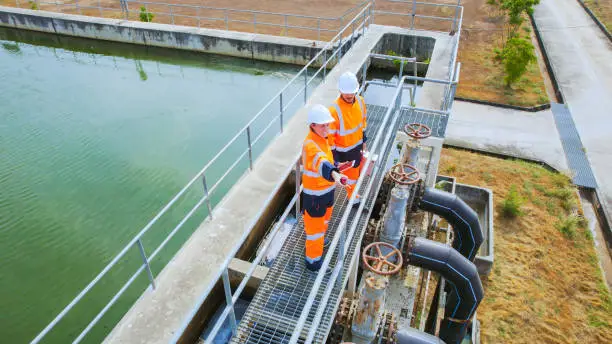
Once the imported water arrives in San Diego County, it is distributed to one of the city’s three water treatment plants, Alvarado, Miramar, and Otay, along with water captured locally in reservoirs like Lower Otay and Miramar Reservoir.
The Otay Water Treatment Plant, the oldest of the three, has served the southern part of the city since the early twentieth century and now supplies roughly one hundred thousand customers.
The Miramar Water Treatment Plant, the largest of the three, has operated since the early 1960s and provides treated water to close to half a million residents in the northern part of the city.
Both plants rely on a conventional treatment process that includes coagulation, flocculation, sedimentation, and filtration, with Miramar using ozone as a primary disinfection step and Otay using chlorine dioxide.
These processes are highly effective at removing pathogens, sediment, and turbidity, which is why San Diego’s tap water consistently meets safety standards. However, none of these treatment stages are designed to remove dissolved minerals like calcium and magnesium.
Hardness passes straight through the filtration and disinfection process untouched, arriving at your tap in essentially the same mineral concentration it had when it left the Colorado River.
Related: How San Diego Hard Water Destroys Tankless Water Heaters Over Time
Why Treatment Plants Cannot Remove Hardness?
Removing hardness requires an entirely different type of treatment than removing bacteria or sediment.
Softening water means physically exchanging calcium and magnesium ions for sodium or potassium ions, a process that municipal treatment plants are not built to perform at scale for an entire city.
Because of this, hardness is considered a water quality characteristic rather than a safety concern, and it is left for individual homes and businesses to address through their own softening systems.
Just How Hard Is San Diego’s Water
Local water quality reporting classifies anything above 180 parts per million as very hard, and San Diego’s treated water regularly falls in the range of 216 to 230 parts per million leaving the treatment plants, which converts to roughly 13 grains per gallon.
Depending on your specific neighborhood and seasonal demand, hardness at the tap can run even higher. This places San Diego firmly in the very hard water category, among the higher readings found anywhere in the state.
Signs Of Hard Water In Your Home
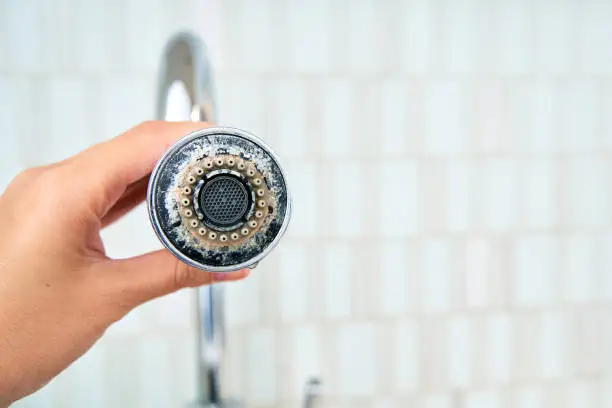
Homes across San Diego often notice the effects of hard water well before they think to test for it.
Common signs include white chalky buildup around faucets and shower heads, soap and shampoo that feel harder to rinse away, spots on dishes and glassware even after washing, and a noticeable buildup of scale inside coffee makers and kettles.
Over time, this same mineral buildup accumulates inside water heaters and plumbing lines, reducing efficiency and adding strain to appliances that rely on consistent water flow.
Related: Why Does My Drain Keep Clogging in San Diego?
How We Help San Diego Homeowners?
Because the source of San Diego’s hardness comes from hundreds of miles away and cannot be filtered out at the municipal level, the most effective long term solution is a whole home water softening system installed directly at your property.
Our San Diego plumbing team evaluates your home’s water hardness, recommends a system sized correctly for your household’s usage, and handles the full installation so your appliances, fixtures, and plumbing lines are protected going forward.
We also service and maintain existing softening systems for homes that already have one in place but are noticing reduced performance.
Frequently Asked Questions
Why does San Diego have such hard water compared to other California cities?
San Diego imports most of its water supply from the Colorado River, which travels through mineral rich terrain and picks up high concentrations of calcium and magnesium along the way. Local treatment plants remove pathogens and sediment but are not designed to remove dissolved minerals, so the hardness carries through to the tap.
Is San Diego’s hard water safe to drink?
Yes. Hardness is a water quality characteristic, not a safety issue. San Diego’s treated water consistently meets state and federal safety standards for drinking water, even though it registers as very hard on the hardness scale.
What is considered hard water in grains per gallon?
Water above roughly 10.5 grains per gallon is generally classified as very hard. San Diego’s tap water typically measures around 13 grains per gallon leaving the treatment plants, and it can measure higher depending on neighborhood and season.
Do the Miramar and Otay treatment plants remove hard water minerals?
No. Both plants use conventional treatment processes designed to remove pathogens, sediment, and turbidity. Calcium and magnesium pass through this process unaffected, which is why hardness needs to be addressed separately at the home level.
How can I reduce the effects of hard water in my home?
A whole home water softener installed at your main water line is the most effective solution, since it treats water before it reaches your fixtures, appliances, and plumbing throughout the house.