Leak Detection San Diego CA helps homeowners find hidden water leaks before they cause major damage. If you are noticing a rising water bill, damp spots on floors or walls, warm areas on the ground, or the sound of running water when nothing is on, you may have a hidden leak behind walls, under slabs, or underground.
Our licensed plumbers use advanced, non-invasive leak detection equipment to accurately locate leaks without unnecessary damage to your home. We identify slab leaks, pipe leaks, wall leaks, and underground water line issues quickly and precisely, so there is no guesswork or unnecessary demolition.
We also explain the cause of the leak, walk you through repair options, and provide honest upfront pricing before any work begins. Homeowners across San Diego trust our team for fast, accurate leak detection and reliable solutions that protect their property and prevent costly water damage.
This is not a scare tactic. There are genuine reasons why leak problems are particularly common in San Diego County, and understanding them helps you recognize warning signs earlier.
Slab leaks are a common concern in Southern California, often caused by the type of copper pipes used in the construction of many homes combined with extremely aggressive local water quality. The chemistry of San Diego’s water supply is notoriously hard on copper, accelerating the internal corrosion process that eventually creates pinholes and cracks.
Over time, chemical reactions within water can corrode pipes, particularly copper pipes in older homes. High water pressure stresses pipes at joints and bends, eventually causing leaks or bursts. Poor installation practices during original construction create additional vulnerabilities in the plumbing system.
Beyond the water chemistry issue, San Diego’s soil conditions add another layer of complexity. Ground movement from seismic activity, even minor tremors that barely register, can shift the pipes running beneath your foundation just enough to crack a joint or open a gap. Once water starts escaping underground, it does not announce itself. It spreads slowly, quietly, and relentlessly until the symptoms become impossible to ignore.
Not all leaks are the same, and the detection method depends entirely on where the leak is coming from. Here is a breakdown of the most common leak categories we handle:
A slab leak is a hidden water leak beneath a home’s concrete foundation, usually caused by damaged water or drainage pipes. Because these leaks occur under the slab, they often go unnoticed until signs like high water bills, damp floors, or structural damage appear. Slab leaks are highly time sensitive, as repair costs can rise from around $1,000 to $10,000 or more if ignored for too long.
These leaks originate from supply lines, drain connections, or fixture fittings hidden inside your walls. They often reveal themselves as water stains, bubbling paint, soft drywall, or discoloration on ceilings below bathrooms. The challenge is locating the exact source without opening up large sections of wall unnecessarily.
The main supply line running from the city meter to your home runs underground, and when it develops a leak, water can travel significant distances before surfacing. These leaks are frequently responsible for skyrocketing water bills that have no visible explanation anywhere inside the house.
San Diego homes with pools lose water to evaporation naturally, but a pool that requires constant topping off is likely losing water through a structural crack or plumbing failure. Pool leak detection requires specialized pressure testing and equipment to distinguish evaporation loss from an actual plumbing or shell issue.
Gas leak detection is a separate category that demands immediate attention. If you smell sulfur or rotten eggs, hear hissing near appliances or gas lines, or notice dead vegetation in a specific patch of your yard, evacuate and call immediately. Gas leaks are handled differently from water leaks and are treated as emergencies without exception.
Leaks can occur in underground pipes and irrigation systems, as well as in areas with heavy plumbing use such as laundry rooms, bathrooms, and kitchens. Irrigation leaks are frequently the cause of spiking water bills in San Diego, particularly during months when systems run frequently.
Most hidden leaks give you signals well before they become catastrophic. The problem is that these signals are easy to dismiss or attribute to something else. Here is what you should not ignore:
1. Your water bill keeps going up
A sudden spike in your water bill without any increase in usage often signals an undetected leak beneath your home. If your habits have not changed but your bill has jumped by 20 to 40 percent, a leak is one of the most likely explanations.
2. You hear water running when nothing is on
Hearing running water when all faucets and appliances are off is a common indicator of a hidden leak. This sound is particularly noticeable at night when the house is quiet.
3. Warm or wet spots on your floor
Wet, damp, or unusually warm floor spots may indicate a leaking pipe beneath the slab. Hot water line leaks under the foundation will heat the concrete above them, creating localized warm patches that feel noticeably different underfoot.
4. Low water pressure throughout the house
Reduced water pressure throughout your home may suggest a leak in the underground water supply line.
5. Cracks in walls or flooring
Water escaping beneath a slab erodes the soil that supports your foundation. Over time, leaks can cause soil erosion or shifting, resulting in visible cracks in walls, flooring, or the foundation itself.
6. Mold or musty odors
Unexplained moisture behind walls or under flooring creates ideal conditions for mold growth, even in dry climates like San Diego’s.
7. Unusually green or wet patches in the yard
Water escaping from underground supply lines or irrigation systems can surface unpredictably, feeding specific patches of grass or creating soggy ground with no obvious explanation.
Water often accumulates several feet away from the actual source of a leak, which is why pinpointing the exact location is a challenge and why professional equipment is necessary. If you are seeing one of these signs, do not assume the problem is minor. Call a leak detection specialist before the damage compounds.
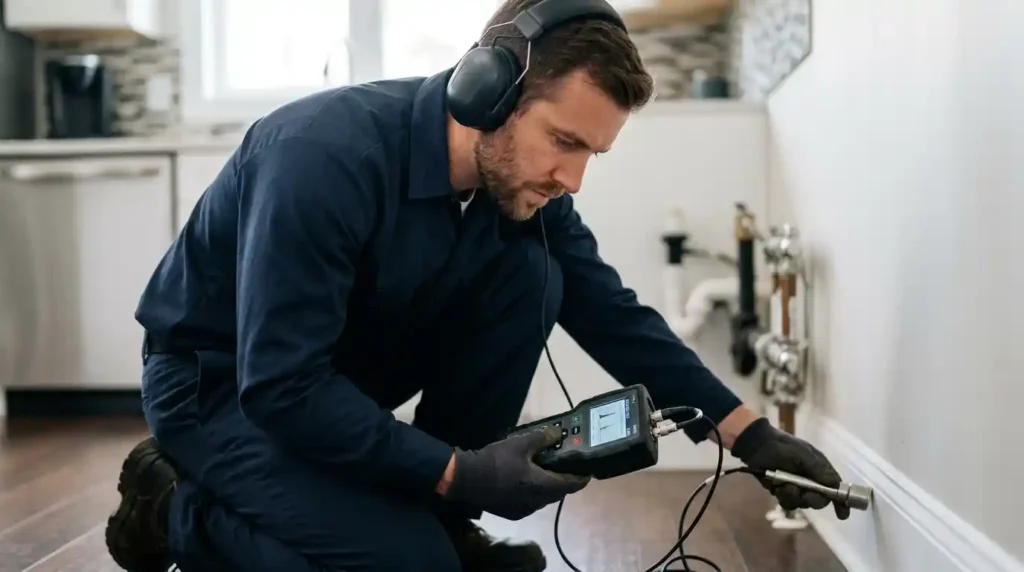
This is the part that surprises most homeowners. Modern leak detection rarely requires tearing anything open before the source has been confirmed. A qualified technician uses several non-invasive tools to narrow down the location precisely before any repair work begins.
Acoustic Listening Equipment
listens for the sound signature of escaping water through pipe walls and surrounding materials. Special equipment listens for the sound of leaking water and helps pinpoint the exact location of the leak by analyzing the noise it makes. Water moving through even a small crack creates a distinctive frequency that trained equipment can identify through concrete, tile, and soil.
Thermal Imaging Cameras
Detects temperature variations in walls and floors that indicate moisture is present. Infrared cameras detect temperature changes in walls and floors, helping find hidden leaks by showing areas where heat is escaping. This is especially useful for hot water line leaks under slabs, where the escaping water heats the material above it.
Pressure Testing
isolates individual sections of your plumbing system to confirm whether a leak exists and in which zone it is located. Leak detection services in San Diego use advanced techniques like monitoring water line pressure drops to locate slab leaks efficiently, ensuring timely repairs and preventing water damage.
Video Camera Inspection
Sends a small camera through the pipe to visually confirm the source of the problem in drain lines and larger supply pipes.
Electronic Line Tracing
Uses radio frequencies to map the path of buried water lines so technicians know exactly where pipes run before any investigation begins.
The combination of these tools means a skilled technician can locate a leak to within inches of its actual position before opening a single wall or breaking any concrete. That precision is what separates a true leak detection specialist from a general plumber who guesses and digs.
One of the most common questions homeowners ask is whether leak detection is billed separately from repair. The honest answer is that it often is, and understanding this upfront prevents frustration.
Detection involves locating the leak using acoustic equipment and thermal imaging. This is a skilled technical process that requires specialized tools and experience. Reputable companies apply the detection fee toward your repair cost if you proceed with their services. If a company quotes you for repair without doing any detection first, that is a significant red flag.
Here is a general sense of what San Diego homeowners pay in 2026:
For basic leak detection and location work, fees typically range from $150 to $500 depending on the complexity of the job and how many zones need to be tested.
Always get a written estimate that separates detection costs from repair costs, includes all materials and labor, and specifies warranty coverage. Never accept a verbal quote for a job of this size.
This question comes up constantly, and the answer requires some nuance.
Most standard homeowners insurance policies in California cover the cost of accessing the leak such as breaking concrete but do not cover the pipe repair itself. They may also cover resulting water damage to flooring and walls depending on your policy.
Coverage depends on your specific policy. Typically, sudden and accidental leaks are covered, but gradual leaks might not be. If your pipe burst overnight and you discovered it the next morning, that is generally treated differently than a leak that has been slowly seeping for months.
Before calling a plumber, it is worth reviewing your policy or contacting your insurance agent directly. Some policies also include separate water line or service line coverage as an optional rider. If you believe insurance may be involved, document everything thoroughly before any repair work begins.
Our leak detection teams are familiar with the plumbing characteristics, pipe ages, and soil conditions specific to each part of the county. We serve homeowners throughout Mission Hills, North Park, South Park, Hillcrest, Clairemont, Point Loma, La Jolla, Pacific Beach, Ocean Beach, University Heights, Kensington, Normal Heights, San Carlos, Rancho Bernardo, Scripps Ranch, Mira Mesa, Del Mar, Encinitas, Carlsbad, Chula Vista, El Cajon, Santee, Poway, Escondido, and surrounding communities.
If your neighborhood is not listed, call us. We cover all of San Diego County and are likely already working in your area.
San Diego has dozens of plumbers who list “leak detection” among their services. The difference between a true leak detection specialist and a generalist who happens to own an acoustic device is substantial.
A hidden leak does not get better on its own. It gets more expensive, more damaging, and more disruptive the longer it goes unaddressed. The technology exists to find exactly where your leak is originating without opening your walls or breaking your floor unnecessarily. The question is simply whether you call a specialist before or after the damage becomes serious.
Our licensed, equipped, and experienced team provides precise leak detection in San Diego CA with transparent pricing and real warranty protection. We locate the leak before we recommend any repair, and we apply your detection fee to the repair cost when you move forward with us.
Call us now for same day or next day service throughout San Diego County.
Most residential leak detection appointments take between one and three hours. Complex cases involving multiple suspect zones or difficult access points can take longer. Your technician should give you a realistic time estimate before starting.
Yes, absolutely. Mold does not require a large amount of moisture to grow. A slow leak inside a wall cavity provides exactly the damp, dark environment where mold thrives. Many homeowners discover mold only after a leak has been present for weeks or months. The sooner the leak is found and repaired, the lower the risk of mold becoming a secondary problem.
The most practical first step is to check your water meter. Turn off every water source in your home including appliances and irrigation systems, then watch the meter for 15 minutes. If the meter is still moving, water is escaping somewhere. That confirms a leak exists even if you cannot see it.
Yes. Leaks do not follow business hours, and neither should your service provider. We offer emergency response throughout San Diego County for situations that cannot wait.
A slab leak is any leak occurring in the water lines running beneath your home’s concrete foundation. A pinhole leak is a very tiny hole, typically in copper piping, caused by corrosion or electrolysis, and can occur anywhere in the plumbing system including under the slab. Both require professional detection and prompt repair.

Providing reliable plumbing services throughout San Diego County, we deliver honest pricing, quality workmanship, and 24/7 emergency support for homeowners and businesses.
Copyright © 2026 Plumbero. All rights reserved.