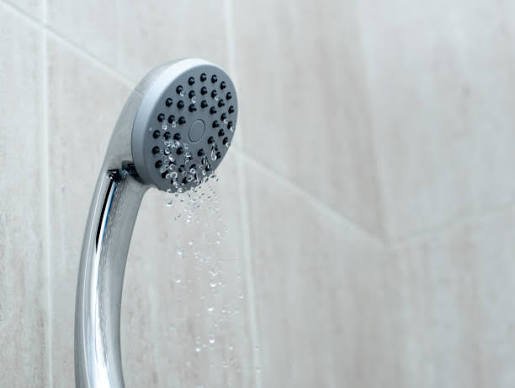
The quickest way to tell whether low water pressure is coming from the city supply or from your own home is to check the pressure at an outdoor hose bibb with a simple gauge. If the reading outside matches what you feel inside, the cause is most likely upstream in the municipal water supply.
If the outdoor reading is normal but pressure drops once water enters the house, the cause is almost always inside your home’s plumbing system, such as a partially closed valve, a worn pressure regulator, or mineral buildup in aging pipes.
As an experienced plumber in San Diego CA, we walk homeowners through this exact diagnostic process every week, and this guide breaks it down step by step so you can figure out the source before calling anyone out.
What Counts as Normal Water Pressure in a San Diego Home

Most homes in San Diego are designed to run comfortably between 40 and 80 pounds per square inch, commonly written as PSI.
Anything consistently under 40 PSI usually feels like a weak trickle at the shower or a slow fill at the kitchen sink. Anything above 80 PSI puts stress on pipes, water heaters, and appliances, and California Plumbing Code requires a pressure regulator on any property receiving more than that from the city main.
Knowing this normal range is the starting point for figuring out whether your home is receiving healthy pressure from the street or losing it somewhere along the way.
The Simple Test That Separates a City Supply Issue From a Home Plumbing Issue

A basic threaded pressure gauge, available at most hardware stores, screws directly onto an outdoor hose bibb in minutes. Here is how to read the results.
Test the outdoor spigot first. Attach the gauge, turn the water on fully, and record the number. This reading reflects what the city main is actually delivering to your property line, before it passes through your home’s internal piping.
Compare it to how the water feels indoors. If the outdoor gauge shows a healthy 45 to 65 PSI but your shower or kitchen faucet still feels weak, the restriction is happening somewhere between the meter and the fixture, meaning it lives inside your home.
Check a second outdoor location if possible. A front and back hose bibb reading that both come in low points toward the water main or the meter connection rather than your internal plumbing.
This ten minute test is the same first step any experienced plumber in San Diego CA will take before diagnosing further, because it immediately narrows the search to either the street side or the house side of the system.
Signs the Low Pressure Is Coming From the City Supply
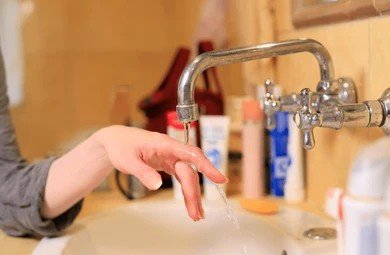
A few patterns point toward the municipal system rather than your own plumbing.
Every fixture in the house loses pressure at the same time, including outdoor spigots that bypass most of your internal piping. Neighbors on the same block mention the same drop around the same time. The change happened suddenly, often lining up with nearby construction, a water main repair, or scheduled maintenance in the area.
San Diego Public Utilities allows residents to request a pressure check at the nearest fire hydrant, and if that reading comes back within the normal range, the department will confirm the issue sits on the private side of the meter rather than the city side.
Signs the Problem Is Inside Your Home’s Plumbing
Other patterns point toward your own system.
Only one fixture or one part of the house is affected while everything else runs normally. The outdoor hose bibb delivers strong pressure while indoor faucets and showers run weak, which usually means something between the meter and the fixture is restricting flow.
The home is older, particularly one built between the 1950s and 1970s in areas like North Park, Kensington, Clairemont, Mission Hills, or Point Loma, where original galvanized piping is still common and gradually narrows from the inside.
Utility bills have climbed without a clear reason, which often points to a hidden leak rather than a supply issue.
Checking Your Water Meter Valve and Main Shutoff Valve
Two valves control how much water reaches your fixtures, and both are worth checking before assuming a bigger repair is needed.
The water meter valve sits next to the meter, usually in an underground box near the curb or sidewalk. It should be turned so the handle sits parallel to the pipe. A handle sitting at an angle means the valve is only partially open, which restricts flow to the entire home.
The main shutoff valve is typically found inside the house, often in a garage, basement, or utility closet, where the main line enters through the foundation. If it uses a round wheel handle, it should be turned fully counterclockwise. A valve that was not reopened completely after a past repair is a surprisingly common and easy to fix cause of whole house low pressure.
The Role of Your Pressure Regulator
Most San Diego homes have a pressure reducing valve, often called a PRV or regulator, installed where the main line enters the property.
City water can arrive at well over 100 PSI in some areas before it reaches the regulator, so this device is what brings it down to a safe, usable range for your faucets, water heater, washing machine, and irrigation system.
Regulators are mechanical parts, and over years of use the internal diaphragm can wear down, causing pressure to drop, fluctuate, or spike unpredictably.
If your outdoor test looks fine but pressure feels inconsistent room to room or hour to hour, a regulator nearing the end of its service life is a common explanation.
Why San Diego’s Hard Water Adds a Layer to the Diagnosis
San Diego is known for notably hard water, often measured well above 250 parts per million of dissolved minerals such as calcium and magnesium.
Over time these minerals form scale deposits inside supply lines, water heater inlets, and showerhead nozzles.
This buildup happens gradually inside the home’s own pipes rather than in the city main, which is why two neighbors on the same street can experience very different pressure levels depending on the age and material of the piping inside each individual house.
Cleaning a showerhead can offer a temporary improvement, but if the narrowing has occurred inside the supply line itself, the underlying restriction remains until the affected section is addressed.
Whole House Drop Versus a Single Fixture Losing Pressure
This distinction alone answers most of the question.
A whole house drop that includes outdoor spigots usually points to the meter, the main shutoff valve, the regulator, or the city supply itself.
A single fixture losing pressure while everything else runs normally usually points to a localized cause, such as a clogged aerator, a kinked supply line, or scale buildup specific to that fixture’s line.
Mapping out exactly which taps are affected before calling anyone gives a plumber a significant head start on locating the cause quickly.
What to Do Once You Know Where the Issue Sits
If your outdoor test and a call to San Diego Public Utilities both confirm the city supply is delivering normal pressure, the next step is a professional evaluation of your home’s internal system, starting with the meter valve, the main shutoff valve, and the pressure regulator, followed by a check for scale buildup or a hidden leak if those come back clear.
A trained plumber uses gauge readings at multiple points in the home, along with leak detection equipment when needed, to pinpoint the exact location without guesswork.
As an experienced plumber in San Diego CA, our approach always starts with this same layered process, confirming the supply side first and then narrowing down the internal system fixture by fixture, so homeowners get an accurate answer rather than a guess.
Related: How to Flush Your Water Heater to Remove San Diego Sediment: A Step by Step Guide
Frequently Asked Questions
What PSI is considered too low for a San Diego home?
Readings that consistently fall below 40 PSI at an outdoor hose bibb are generally considered low for a residential system in San Diego.
Can the city confirm whether the supply pressure is normal?
Yes. San Diego Public Utilities can test pressure at the nearest fire hydrant upon request and will report back whether the reading in your area falls within the expected range.
Does hard water actually lower water pressure over time?
Yes. Mineral deposits from San Diego’s hard water gradually narrow the inside diameter of supply lines and fixtures, which reduces flow even when the incoming city pressure is completely normal.
Is a pressure regulator required on every San Diego property?
California Plumbing Code requires a regulator whenever incoming pressure from the main exceeds 80 PSI, which applies to a large share of San Diego properties given how high city main pressure can run before regulation.
Should I test pressure at more than one spot in the yard?
Testing a front and a back hose bibb, when both exist, gives a more reliable picture and helps rule out a localized restriction near just one connection point.
Final Thoughts
A ten minute gauge test at an outdoor spigot is usually enough to point you in the right direction, toward either the municipal supply or your own home’s plumbing. From there, checking the meter valve, the main shutoff valve, and the condition of your pressure regulator narrows things down even further.
San Diego’s combination of hard water and a large number of older homes means the internal side of the equation deserves just as much attention as the city side, and a proper diagnosis usually saves both time and money compared to guessing.