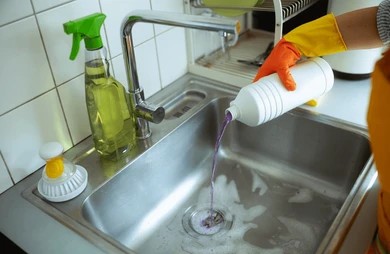
You can clear a stubborn drain clog without ruining your pipes by skipping harsh chemical cleaners and using mechanical and natural methods instead, such as a plunger, a drain snake, or a baking soda and vinegar flush followed by hot (not boiling) water.
These approaches loosen buildup gently while protecting the interior of your pipes from the corrosion that chemical cleaners are known to cause over time.
As a plumbing team that provides plumbing service in San Diego, CA, we get calls every week from homeowners whose pipes were weakened long before we arrived, simply because a bottle of drain cleaner was used one too many times.
Why Chemical Drain Cleaners Are Riskier Than They Look?
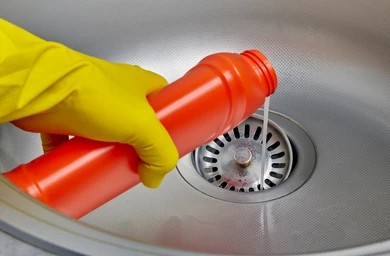
Most store bought drain cleaners rely on strong compounds like sodium hydroxide or sulfuric acid to dissolve clogs. They work quickly, which is exactly why so many homeowners reach for them first. The problem is what happens after the clog clears.
These chemicals generate intense heat as they react, and that heat can soften or warp PVC pipes and weaken the seals around older metal pipes.
Repeated use gradually thins pipe walls, making them more likely to develop leaks or crack under normal water pressure.
There is also a safety angle worth understanding. If the clog does not fully dissolve, the chemical solution can sit in standing water, creating splash and fume hazards the next time someone tries to plunge or snake the drain.
For septic systems specifically, harsh chemicals can also disrupt the natural bacteria that keep the tank functioning properly.
Start With the Gentlest Method: Boiling Water
For simple clogs caused by soap scum or light grease buildup, hot water alone can work wonders. Boil a full kettle, let it cool for about thirty seconds so it is not scalding, and pour it down the drain in two or three stages, giving it a short pause between pours.
This lets the heat soften the buildup gradually instead of shocking the pipe all at once, which matters most if you have PVC piping.
The Baking Soda and Vinegar Method
This is one of the most searched home remedies for a reason: it is cheap, gentle, and genuinely effective on moderate clogs. Here is the process:
- Remove any standing water from the sink or tub first.
- Pour about half a cup of baking soda directly into the drain.
- Follow with a cup of white vinegar and cover the drain opening if you can, since the mixture will fizz.
- Let it sit for fifteen to thirty minutes.
- Flush with hot water.
The fizzing reaction helps break apart organic debris like hair, soap residue, and food particles without introducing anything corrosive to the pipe walls.
Reach for a Plunger Before Anything Else Mechanical

A sink plunger, distinct from the larger toilet version, creates suction that can dislodge many everyday clogs. Fill the basin with just enough water to cover the plunger cup, form a tight seal over the drain opening, and plunge firmly for twenty to thirty seconds.
This method relies on pressure and suction rather than force pushed straight through the pipe, which is part of why it is considered one of the safer tools in a homeowner’s kit.
Check and Clean the P-Trap
The P-trap is the curved section of pipe underneath most sinks, and it is a common spot for debris to settle. To access it:
- Place a bucket underneath to catch water and debris.
- Loosen the slip nuts on either side by hand or with a wrench.
- Remove the trap and clear out any buildup.
- Reattach it and run water to confirm the clog is gone.
This is a straightforward task for most homeowners and avoids introducing any chemicals into the line at all.
Using a Drain Snake or Auger for Deeper Clogs
When a clog sits beyond the reach of a plunger, a drain snake, sometimes called an auger, can extend further into the pipe.
Insert the flexible cable into the drain until you feel resistance, then rotate the handle to hook or break apart the blockage before slowly pulling it back out.
For hair heavy clogs in bathroom drains, this tool tends to outperform both chemical cleaners and plungers, since it physically removes the material rather than trying to dissolve it.
A Wet or Dry Vacuum Can Help Too
If you have a wet or dry shop vacuum, it can create strong enough suction to pull a clog loose. Set the vacuum to liquid mode, form as tight a seal as possible over the drain with the hose attachment, and run it for a minute or two. This method is particularly useful for kitchen sinks with grease related buildup.
Preventing Clogs From Coming Back
A little routine care goes a long way toward keeping pipes clear between deep cleans.
- Install mesh strainers in sinks, tubs, and showers to catch hair and food particles before they enter the line.
- Avoid pouring grease, oil, or coffee grounds down the drain, since they solidify inside pipes over time.
- Run hot water through drains weekly to keep minor buildup from accumulating.
- Flush drains with a baking soda and vinegar treatment once a month as light maintenance.
Signs a Clog Needs Professional Attention
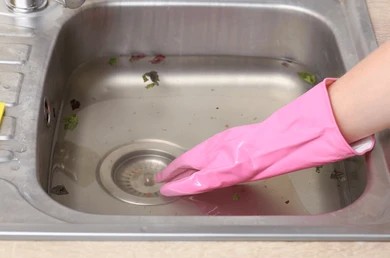
Some clogs point to a larger issue further down the line, especially if more than one fixture in the house is draining slowly at the same time, or if a clog keeps returning within days of clearing it.
Gurgling sounds from other drains, water backing up into a different fixture, or unusually slow drainage throughout the home can all indicate a blockage deeper in the main sewer line, which typically requires a camera inspection or hydro jetting rather than a home remedy.
In these situations, a licensed plumber can locate the exact source of the blockage and clear it using equipment that will not compromise your pipe material.
Related: What to Do When Your Water Pressure Suddenly Drops to a Trickle
Final Thoughts
Clearing a drain does not have to come at the cost of your plumbing’s long term health. Boiling water, a baking soda and vinegar flush, a plunger, or a drain snake will resolve the vast majority of household clogs while keeping your pipes intact.
As local plumbing professionals who provide plumbing service in San Diego, CA, our team regularly sees the difference between homes that rely on these gentle methods and homes that lean on chemical cleaners year after year.
When a clog resists every home remedy, that is usually the moment to bring in a professional rather than reach for a stronger bottle.
Related: Drought Conditions and Your Plumbing: How Low Flow Fixtures Can Cause Drain Clogs
FAQs
Is it safe to use a plunger on every type of drain clog?
A plunger works well on most sink, tub, and shower clogs caused by hair, soap scum, or food particles. It is less effective on clogs deep within the main line or ones caused by solid objects, since a plunger only reaches the section of pipe near the drain opening.
How long should baking soda and vinegar sit in a drain before flushing?
Fifteen to thirty minutes is usually enough time for the fizzing reaction to loosen buildup. For tougher clogs, letting the mixture sit for a full hour, or even overnight, often gives it more time to break down grease and organic debris.
Can chemical drain cleaners really weaken PVC or metal pipes over time?
Yes. The heat generated by the chemical reaction can soften PVC and stress the joints and seals in metal piping. Occasional use is unlikely to cause noticeable harm, but frequent use gradually thins pipe walls and raises the chances of leaks or cracks down the line.
What does it mean if multiple drains in my home are slow at the same time?
This usually points to a blockage in the main sewer line rather than a clog in one fixture. Since this section of plumbing serves the entire home, a professional camera inspection is typically needed to pinpoint the exact location and clear it properly.
How often should I do preventive drain maintenance?
A monthly baking soda and vinegar flush, combined with weekly hot water rinses, is generally enough to keep most household drains clear. Homes with a lot of hair or grease going down the drain may benefit from doing this every two weeks instead.