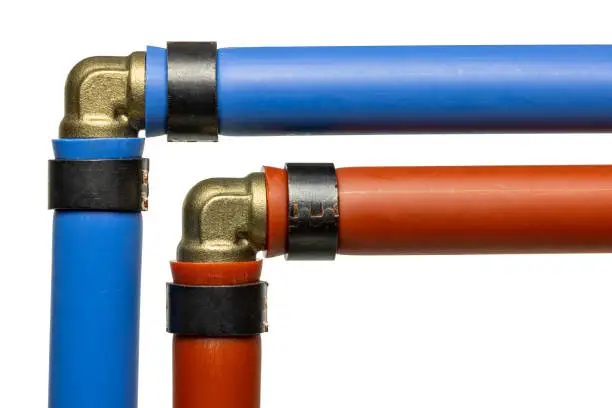
Copper and PEX are both approved, reliable repiping materials in San Diego, and the better choice for your home depends less on which pipe is objectively superior and more on your home’s architecture, foundation type, and how San Diego’s mineral heavy water interacts with each material over time.
This is one of the most debated topics among San Diego homeowners, and threads on Reddit and local forums are full of strong opinions on both sides, often shaped by one person’s experience rather than the full picture.
We work with homeowners across San Diego evaluating exactly this decision, and this guide breaks down what actually matters for local conditions rather than repeating generic pros and cons lists.
Why This Debate Is So Active in San Diego Specifically?
San Diego draws much of its water supply from the Colorado River Aqueduct and the State Water Project, both of which carry a high mineral content compared to water sourced from mountain snowmelt or softer regional aquifers.
That water chemistry interacts differently with copper and PEX, which is the root of most of the online disagreement.
Add in San Diego’s seismic activity, its mix of coastal and inland soil types, and a housing stock that spans Spanish Revival homes in Mission Hills, mid century construction in Kensington and Clairemont, and modern slab foundation builds further inland, and you get a region where the “correct” answer genuinely changes from one property to the next.
How San Diego’s Water Chemistry Affects Copper?
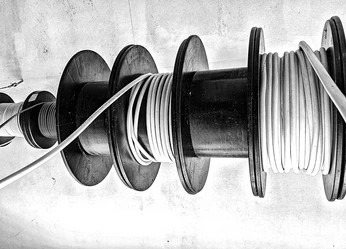
Copper has been a trusted plumbing material for decades, valued for its rigidity, heat tolerance, and long service history.
In softer water regions, copper pipe can comfortably last 70 years or more. San Diego’s harder, higher mineral water changes that timeline.
Over years of exposure, miner
als in the water can contribute to pinhole corrosion, small pit like perforations that eventually cause slow leaks, often first noticed as a damp spot on drywall or a slight drop in water pressure.
This does not mean copper performs poorly here. Many San Diego homes still run on original copper installed decades ago with no issues at all, and copper remains a strong choice in several situations, particularly where plumbing will stay partially visible, such as in older Craftsman or Spanish Revival homes in neighborhoods like North Park or South Park, where matching the traditional look of the original construction matters to homeowners.
How PEX Performs Under Local Conditions?
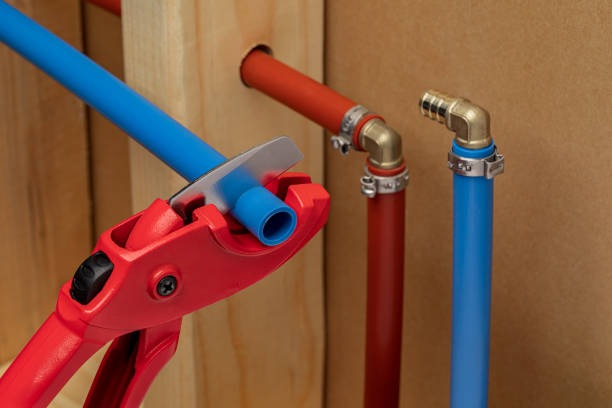
PEX, short for cross linked polyethylene, has grown steadily in popularity for San Diego repiping projects over the past decade, largely because several of its characteristics line up well with local conditions.
Its flexible construction gives it a natural advantage in earthquake prone regions, since it can flex slightly under ground movement rather than cracking the way a rigid material might.
This flexibility also allows installers to run longer continuous lines with fewer joints, and fewer joints generally means fewer potential leak points over the life of the system.
PEX’s smooth interior surface also resists mineral scale buildup better than copper, which matters given San Diego’s water hardness.
For homes on slab foundations, a common construction style in newer developments across areas like Rancho Bernardo, Scripps Ranch, and parts of Chula Vista, PEX’s flexibility also simplifies routing through tight spaces without the extensive soldering copper requires.
Matching the Material to Your Home’s Architecture
San Diego’s architectural variety is part of what makes this decision more nuanced than a simple material comparison. A few patterns tend to hold true across the region.
Historic and character homes. In older neighborhoods with Spanish Revival, Craftsman, and early twentieth century construction, such as sections of Mission Hills, Burlingame, and parts of downtown adjacent districts, copper often integrates more naturally with existing plumbing runs and complements the traditional aesthetic when any piping remains visible.
Mid century homes. Properties built in the postwar decades often have simpler, more open wall cavities, which makes either material a workable option, with the final decision usually coming down to budget and long term maintenance preference rather than structural limitations.
Modern slab foundation homes. Newer construction across San Diego’s inland communities frequently favors PEX, since its flexibility simplifies installation under slab conditions and its resistance to scale buildup pairs well with the region’s water hardness.
Homes near the coast. Coastal properties sometimes deal with additional soil movement and moisture exposure, and PEX’s corrosion resistance offers a practical advantage in these settings, though a proper site specific evaluation is always the better guide than a blanket rule.
What the Online Debate Often Leaves Out?
Forum discussions on this topic tend to focus heavily on longevity claims, with some homeowners citing decades of trouble free copper and others pointing to early pinhole leaks as proof PEX is the only sensible choice going forward.
Both experiences are real, but they usually reflect specific water conditions, installation quality, and home layout rather than a universal rule.
A copper system installed with proper grounding, appropriate pipe thickness, and attentive soldering can perform very well even in San Diego’s water.
A PEX system installed with fittings that meet current standards and proper support throughout the run performs just as reliably. Installation quality consistently matters as much as material choice, something that gets lost in a lot of the back and forth online.
Cost and Long Term Considerations
Material cost is one of the more consistent differences between the two options, with copper typically running two to three times higher than PEX for materials alone, and copper’s soldered joint installation process generally requiring more labor time than PEX’s crimped or expansion fittings.
For homeowners weighing a whole house repipe, this cost gap often factors into the decision alongside performance considerations, particularly on larger properties where the difference in material volume becomes more significant.
Insurance and resale considerations also come up frequently in local discussions. Some buyers and inspectors view copper as the more traditional, expected material in older, established neighborhoods, while PEX has become widely accepted in newer construction and is increasingly common in repiping projects across the county as more contractors and inspectors gain experience working with it.
Why Local Expertise Changes the Outcome

Because San Diego’s water chemistry, seismic conditions, and architectural diversity all interact differently with each material, a repipe plan that works well in one neighborhood is not automatically the right plan two miles away.
As the most experienced plumber in San Diego CA working across these varied conditions, we approach every evaluation by looking at the specific home, its water exposure, its foundation type, and its architectural era before recommending a direction, rather than defaulting to one material as a universal answer.
Related: Drought Conditions and Your Plumbing: How Low Flow Fixtures Can Cause Drain Clogs
Final Thoughts
Copper and PEX are both proven, code approved materials, and the right choice for a San Diego home depends on a combination of water chemistry, soil and seismic conditions, foundation type, and the architectural era of the property itself.
Rather than following whichever opinion is loudest on a forum thread, the more reliable path is understanding how each material actually performs under your home’s specific conditions and making a decision built around that reality.
Related: Thermal Expansion Leaks: What Sudden Summer Heatwaves Do to Your Pipes
Frequently Asked Questions
Is PEX or copper better for San Diego’s hard water?
PEX generally handles San Diego’s mineral heavy water better over time, since its smooth interior surface resists scale buildup, while copper can be more susceptible to pinhole corrosion from mineral exposure over several decades. Copper still performs reliably in many San Diego homes, particularly when installed correctly, but PEX carries a clearer advantage specifically where water hardness is concerned.
Does San Diego’s earthquake activity affect which pipe material is better?
Yes, to some degree. PEX’s flexibility allows it to move slightly with ground shifting rather than cracking, which gives it a practical advantage in seismically active regions. Copper is rigid and generally performs well too, but its joints can be more vulnerable to stress from significant ground movement compared to PEX’s fewer, more flexible connection points.
Is copper still a good choice for older or historic San Diego homes?
Copper remains a strong option for older homes, particularly in neighborhoods with Spanish Revival or Craftsman architecture where plumbing may stay partially visible or where matching the home’s traditional character matters. Many established San Diego properties have run reliably on copper for decades, especially when the original installation followed proper grounding and soldering practices.
How much more does copper repiping cost compared to PEX in San Diego?
Copper typically costs two to three times more than PEX for materials alone, and the soldered joint installation process usually adds more labor time compared to PEX’s crimped or expansion fittings. The exact cost difference depends on the size of the home, the number of fixtures, and how accessible the existing walls and foundation are.
Can PEX be used in a slab foundation home in San Diego?
Yes, PEX is commonly used in slab foundation homes throughout San Diego, particularly in newer construction across inland communities. Its flexibility makes it easier to route through tight under slab spaces with fewer joints, which is one of the reasons it has become a popular choice for repiping projects in this type of construction.